
Shobha Kapoor and Ekta Kapoor, managing director (MD) and joint MD of media firm Balaji Telefilms have failed to obtain requisite votes on resolutions pertaining to their remuneration. According to stock exchange disclosure made by the company, the two separate special resolutions on setting their salaries for the next years got 56.77 per cent and 55.45 per cent 'against' vote.

It's raining IPOs, with eight issues hitting the market in a span of six days. However, the pace of new filings points to a deluge during the latter part of the year. So far this year, 58 companies have filed their draft red herring prospectus (DRHP) with the market regulator for initial public offerings (IPOs), exceeding the combined tally of 50 in the last two years. Industry participants said the filing count could cross 100 this year, setting a new benchmark in terms of amount mobilised in a calendar year.

Technology firm Wipro has a "high probability" of getting included in the benchmark Sensex, while two-wheeler major Bajaj Auto is the "most likely" deletion candidate, according to an analysis done by Brian Freitas, an analyst at independent research provider Smartkarma. The changes to the index will be announced mid-November, and will become effective from December 17. The December review uses the 6-month average market capitalisation and trading turnover data between May 1 and October 31 to determine changes.

The relentless rally in small- and mid-cap stocks continues as large-caps show signs of fatigue. In July, the Nifty Smallcap 100 rose 8.1 per cent, extending its year-to-date (YTD) gains to 48.5 per cent, while the Nifty Midcap 100 added 3.1 per cent, taking its YTD rise to 33.5 per cent. On the other hand, the Nifty50 remained unchanged for the month, with YTD gains of 12.7 per cent.

India's first unicorn Zomato will make its stock market debut on Friday, marking a historic moment for the domestic capital market. As per initial schedule, Zomato's listing was to take place on July 27. However, investment banks managed to complete the share allotment and listing formalities ahead of the deadline. Under the Sebi framework, the timeline between IPO closing and listing has to be six working days. Zomato's IPO had closed on July 16.

According to its DRHP filed in 2010, the company's net worth was just Rs 140 crore. Its total income for the financial year 2009-10 stood at Rs 119 crore and it had a net profit of Rs 16 crore. In sharp contrast, at the end of March 2021, Paytm's networth was Rs 6,535 crore and total income stood at Rs 3,187 crore.
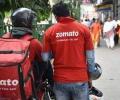
Zomato could get added to the MSCI and FTSE indices by the end of this year, while an entry to the Nifty or the Sensex would be challenging before the second half of 2022, said Brian Freitas, an analyst at independent research provider Smartkarma, in note. "With nearly the entire pre-IPO shares locked up for one year, the free float will be very low and the stock will need to move higher to around Rs 328 per share (4.3 times over possible IPO price of Rs 76) to be included in the Nifty index (with no change in the market cap of the smallest index constituent). "We can be reasonably certain that Zomato will not be included in the Nifty index till the September 2022 rebalance at the earliest," he said.
Food delivery company Zomato's Rs 9,375-crore initial public offering (IPO) will open for subscription on July 14, said investment banking sources on Wednesday. The company initially was looking to raise Rs 7,500 crore through the offering. Investment banking sources said the issue size has been increased because of the robust demand from investors.

The company, backed by China's Ant Group, is planning to issue fresh shares worth Rs 7,500 crore in the IPO. This will make this India's third-largest offering after Reliance Power and DLF.

Brokerages are expanding the universe of stocks they cover amid a boom in the market. Several stocks in the mid-cap universe are now tracked by more analysts than they were a year ago. For instance, SBI Cards and Payment Services is now tracked by 17 brokerages, compared to just four a year ago.
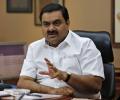
The clarification by the National Securities Depository (NSDL) - which is tasked with monitoring foreign portfolio investor (FPI) investment in domestic stocks - that the accounts of top investors in Adani group stocks remain 'active' has helped prevent a $500-million selloff of shares. Analysts said a freeze of the FPI accounts, as reported by some media outlets, could have prompted global index providers to cut weighting of four Adani group companies from their global indices. Brian Freitas, an analyst at independent research provider Smartkarma, said if the FPI accounts were indeed frozen, FTSE and MSCI would have reduced weighting of Adani group companies at the next rebalance, since it would have meant that the large part of the free float was not tradeable.

Easier dilution norms for mega initial public offerings (IPOs) have come into effect. Companies with post-listing market capitalisation (m-cap) of more than Rs 1 trillion will not be required to dilute a minimum of 10 per cent. The move to relax dilution norms is seen as a precursor to Life Insurance Corporation's IPO. The central government has said companies with an m-cap exceeding Rs 1 trillion will have to dilute Rs 5,000 crore and at least 5 per cent of their m-cap. Experts said the earlier framework discouraged large companies from listing since they were forced to offload a large volume of shares during the time of their IPO.

The Securities and Exchange Board of India (Sebi) has directed Franklin Templeton MF to pay Rs 5 crore as penalty, return over Rs 450 crore collected as 22-month investment management and advisory fees, and imposed a two-year ban on launching new debt schemes for alleged irregularities in running six of its debt schemes that were shuttered last year.

Domestic equity markets are in elite company. In May, Indian markets joined select developed markets (DMs) such as the US, UK and Germany to record new all-time highs. Among emerging markets (EMs), Brazil is the other market to have logged new highs this month. Asian peers such as South Korea, Taiwan and New Zealand are currently between 2 per cent and 10 per cent below their previous highs made earlier this year. The domestic markets were among the worst-performing major global markets in April amid a lethal second-wave of covid-19 infections.

With India's market capitalisation surpassing the $3-trillion mark, stocks across the board are adding heft. The upper limit for qualifying as a mid-cap stock -under the Securities and Exchange Board of India's (Sebi's) definition for mutual fund reclassification - has hit an all-time high of $5.4 billion. In 2013, amid the taper tantrum sell-off, it had dropped to just $1 billion, shows an analysis done by ICICI Securities.

'Personally, I have reached that stage where I think material things can't give you any satisfaction.'

The country's dash to a $3-trillion market cap is more a case of teamwork, than a few members doing most of the heavy lifting. Sample this: The share of top 100 companies to India's total market cap (BSE-listed companies' m-cap) is 67.3 per cent currently, less than what it has been when the nation hit previous milestones, such as $1 trillion, $1.5 trillion in 2007 or $2.5 trillion more recently in December 2020. In 2007, when India's m-cap topped the $1-trillion mark for the first time, the top 100 companies accounted for three-fourths of the total m-cap; at $1.5 trillion, the share was almost 80 per cent.

Thirteen companies have joined the Rs 1-trillion-plus market capitalisation club this year, so far. This even as the benchmark Sensex has gained less than 3 per cent on a year-to-date basis, underscoring the bullish undercurrent in the broader market. The trend shows a harsh second wave of Covid-19, subsequent lockdowns, and hit to the economic activity has made little dent into India Inc or shareholders' wealth. At the start of the year, there were 29 companies with a market value of more than Rs 1 trillion.

In 2020-21, Indian firms offered to buy back shares worth Rs 39,295 crore, or 97% more than Rs 19,972 cr proposed in the previous financial year.
Covid-19, US yields, dollar to weigh on equity flows in the near term.
